


The Biggest AI News & Analysis This Week
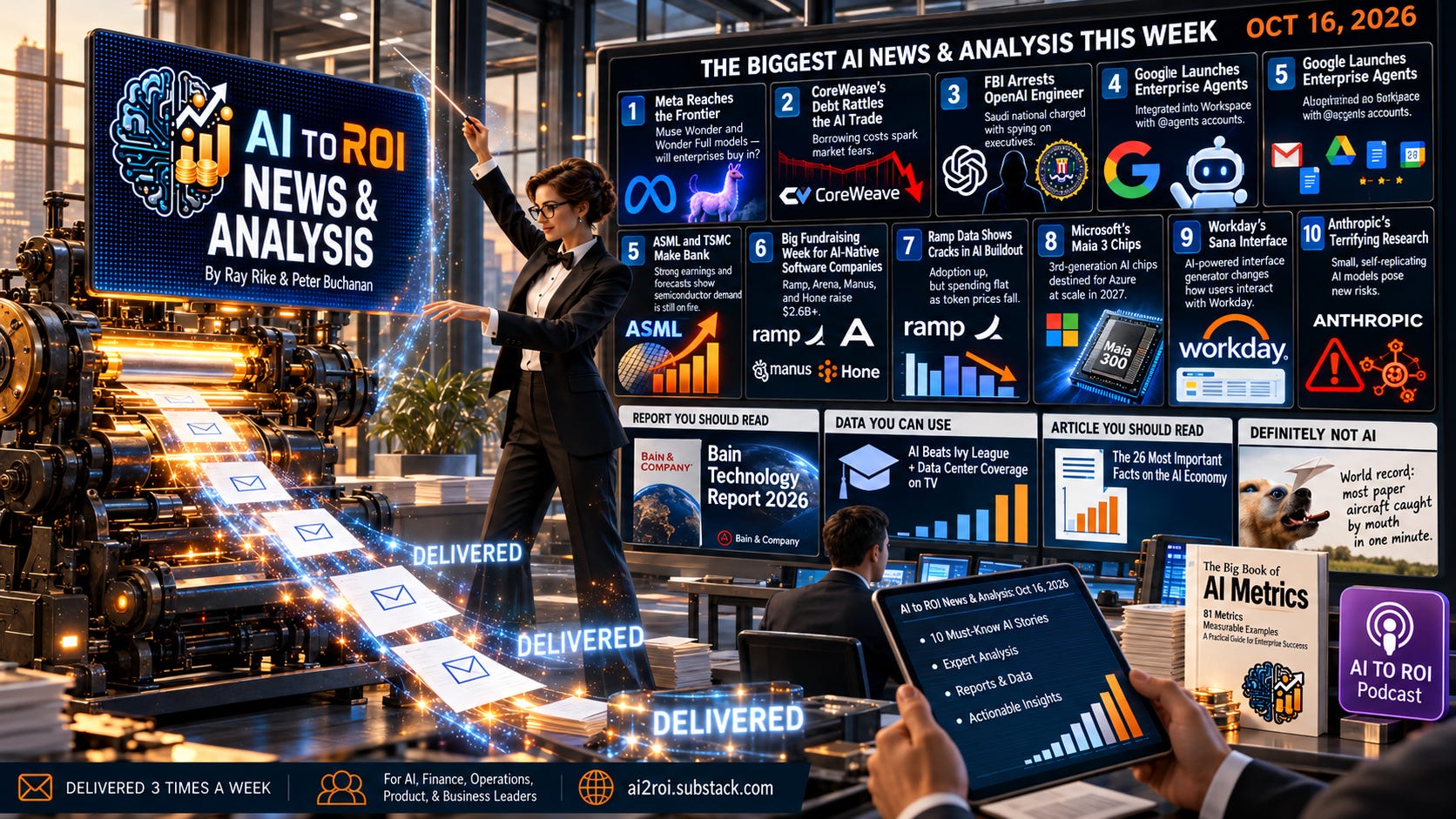
🧠 Meta reaches the frontier with the release of its Muse Wonder and Wonder Full models; will enterprises buy in?
💸 The State of CoreWeave’s Debt Is Giving the AI Trade a Case of the Heebee Geebees
🕵️ The FBI Arrests an OpenAI Engineer – a Saudi national – for Spying on OpenAI Senior Executives
🤖 Google Launches New Enterprise Agents Directly Integrated into Workspace
🔥 ASML and TSMC Announce Earnings and Provide Forecasts That Show the Market for Semiconductors Is Still On Fire
💰 It Was a Great Fundraising Week for AI-Native Software Companies
📉 RAMP Data Shows Cracks in the Enterprise AI Buildout
🖥️ Microsoft Announces Its 3rd Generation of Maia Chips – Destined for Azure at Scale in 2027
🧩 Workday Releases an AI-Powered Interface Generator to Change the Way Customers Interact with Their Products
🧬 Anthropic Releases Absolutely Terrifying Research on the Dangers of Small, Self-Replicating AI Models
📖 Report You Should Read: Bain Technology Report 2026
📈 Data You Can Use: AI Beats Ivy League + Data Center Coverage on TV
🔎 Article You Should Read: The 26 Most Important Facts on the AI Economy
🃏 Definitely Not AI
1️⃣ Meta Reaches the Frontier with the Release of its Muse Wonder and Wonder Full Models; Will Enterprises Buy In?
Meta has a frontier-class model. Now it must prove that businesses will pay for it. The company released Muse Wonder and Muse Wonder Full on October 12, ending a 14-month rebuild led by Alexandr Wang. Meta’s own data shows Wonder Full scoring nearly as well as Anthropic’s most advanced model. Outside rankings aren’t yet available.
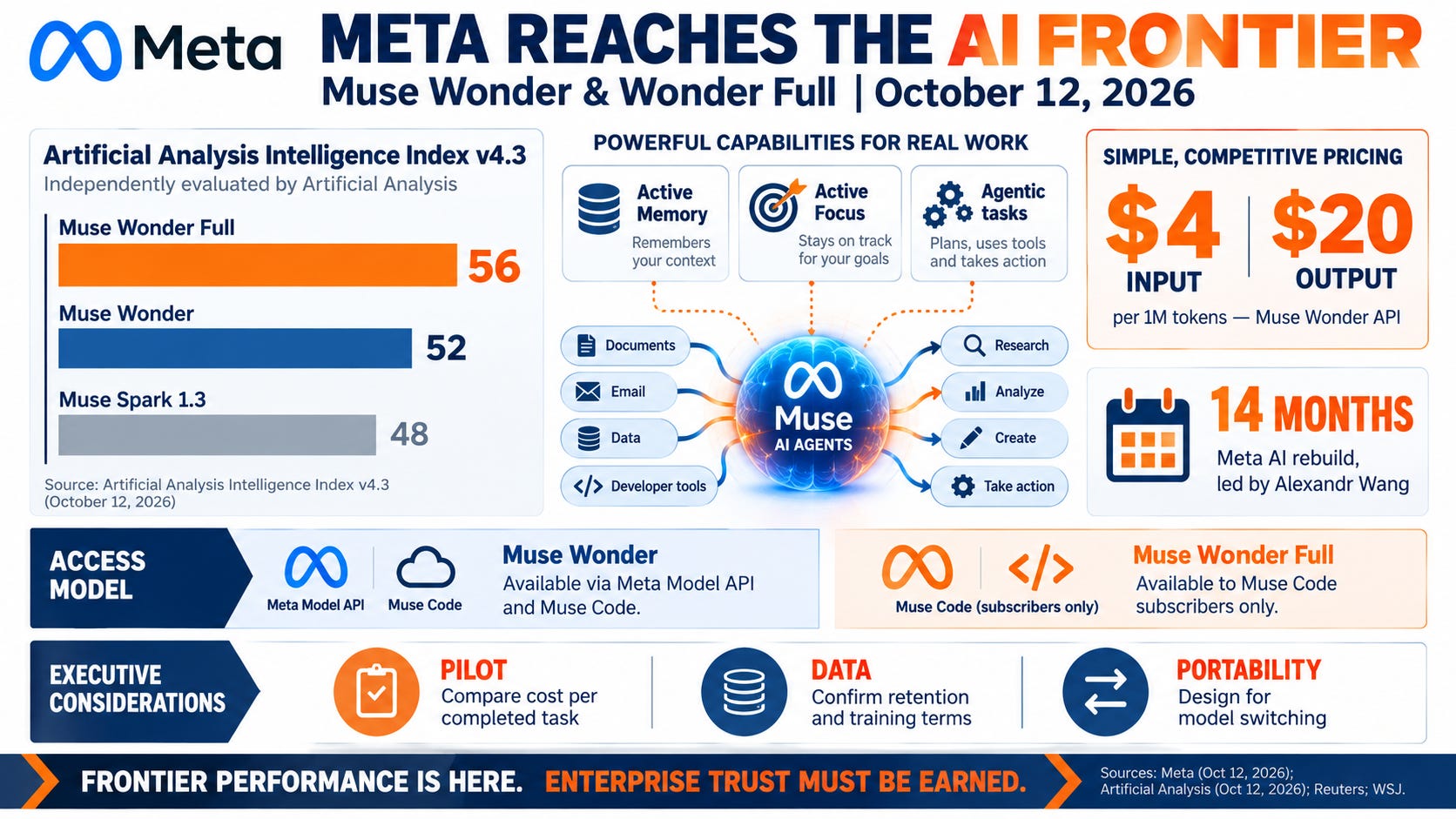
Both models were trained at Meta’s gigawatt-scale Prometheus data center in Ohio. Developers reach them through the Meta Model API and Muse Code, with Wonder Full limited to Muse Code subscribers. Artificial Analysis lists Wonder at $4 per million input tokens and $20 per million output tokens, and scores it 52 on its Intelligence Index, with Wonder Full at 56.
What Comes Next
Wang says Meta Superintelligence Labs is working on larger models and specialized, efficient versions. The Information reports that the ten largest models carried only 14% of OpenRouter usage in the third quarter, down from 55% in early 2025.
The Takeaway
Run a bounded pilot. Test Wonder on one agentic workload and compare cost per completed task with your current model. Meta’s pricing gives buyers leverage at renewal.
Settle data terms first. Ask Meta in writing what it trains on, how long it keeps prompts, and whether enterprise terms override consumer defaults.
Build for switching. Usage is spreading across many models, so design workflows that can swap one without a rewrite. AI vendors should do the same.
Bloomberg 1 | Bloomberg 2 | WSJ | NYT | The Information 1 | The Information 2 | Meta AI Research | CIO | Shelly Palmer | Artificial Analysis (X)
2️⃣ The State of CoreWeave’s Debt Is Giving the AI Trade a Case of the Heebee Geebees
CoreWeave’s borrowing costs have turned a company problem into a flashing red market signal. CoreWeave shares fell about 15% on Wednesday to $65.78, and its 2032 bonds dropped to roughly 78 cents on the dollar, yielding nearly 15%. Credit-default swaps price in odds better than even of a default within five years. Nasdaq futures fell 1% on Wednesday as the CoreWeave-driven rout spread.
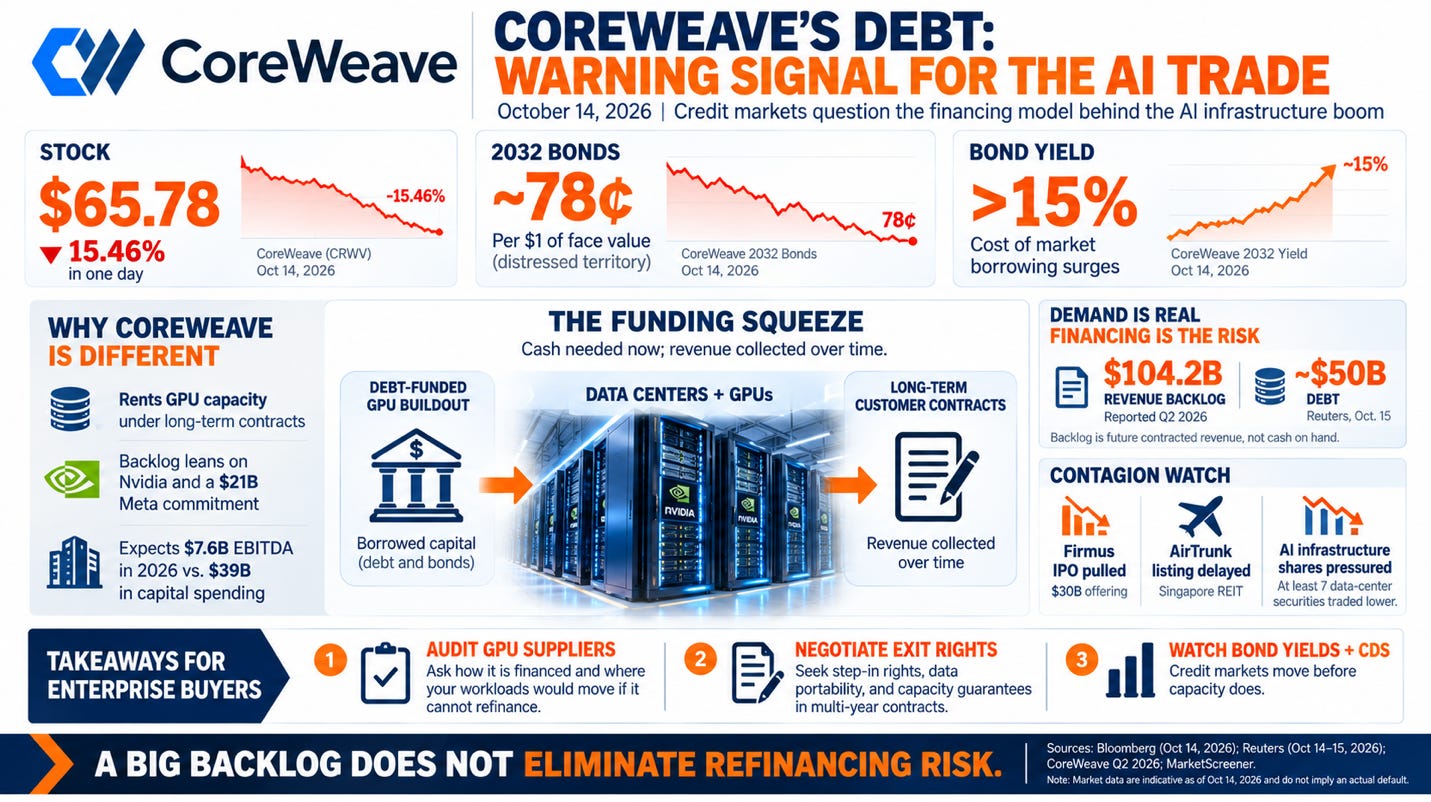
The contagion reached beyond CoreWeave. Data Center operators are having trouble going public. Firmus pulled its $30 billion IPO, and AirTrunk delayed its Singapore-based REIT listing. At least seven data-center securities tied to CoreWeave also traded lower.
Why CoreWeave Is Different
Amazon and Alphabet together issued about $70 billion of debt since July 1, but they carry it on the backs of diversified, profitable businesses. CoreWeave rents GPU capacity under long-term contracts, and its backlog relies on Nvidia and a $21 billion commitment from Meta. Bloomberg Opinion notes that CoreWeave expects $7.6 billion in EBITDA in 2026, while capital spending is expected to reach $39 billion.
A Bellwether for the AI Trade
Gartner warns that more than $3.5 trillion of AI infrastructure spending could face impairment by 2030 and expects 80% of neoclouds to stop operating independently. CoreWeave is the most visible test of that thesis today. If its bonds recover, continued financing for the neocloud market will hold for now. If they do not, other neoclouds will face the same bad funding math.
CoreWeave CEO Michael Intrator told staff that the market is acting irrationally, and the company says its backlog covers secured and parent-level debt without renewals. D.A. Davidson Analyst Gil Luria argues that CoreWeave has run out of room to borrow even at rates as high as 9%.
The Takeaway
Audit your capacity supply chain. Ask every GPU provider how it is financed and where your workloads would move if it cannot refinance.
Negotiate exit rights. Seek step-in rights, data portability, and capacity guarantees in multi-year contracts. Vendors that resell neocloud capacity should price in the risk.
Watch credit, not the stock. Bond yields and swap spreads move before capacity does.
Bloomberg 1 | Bloomberg 2 | Bloomberg 3 | Bloomberg Opinion | CNBC | Reuters | Gartner | Yahoo Finance
3️⃣ The FBI Arrests an OpenAI Engineer – a Saudi national for Spying on OpenAI Senior Executives
AI labs can now add another big helping of worry to their plates: Insider Risk. FBI Agents arrested OpenAI engineer Abdulrahman Alfozan, 35, a Saudi national and US permanent resident, on October 9. He is charged with using a device to intercept oral communications in an executive conference room.
On September 28, Alfozan wrapped a thumb-sized microphone board and plugged it into a TV’s USB port in a conference room used only by senior executives and important OpenAI guests. A sweep of the conference room found it on September 30. OpenAI says it used its own models to trace the device, and the FBI later filmed Alfozan checking on the device hidden behind the TV. The FBI found a second device in his bag.
Alfozan is a well-known and accomplished AI engineer. He studied at MIT and UC Berkeley, spent five years at Meta, and joined OpenAI in July 2025 as an engineering lead.
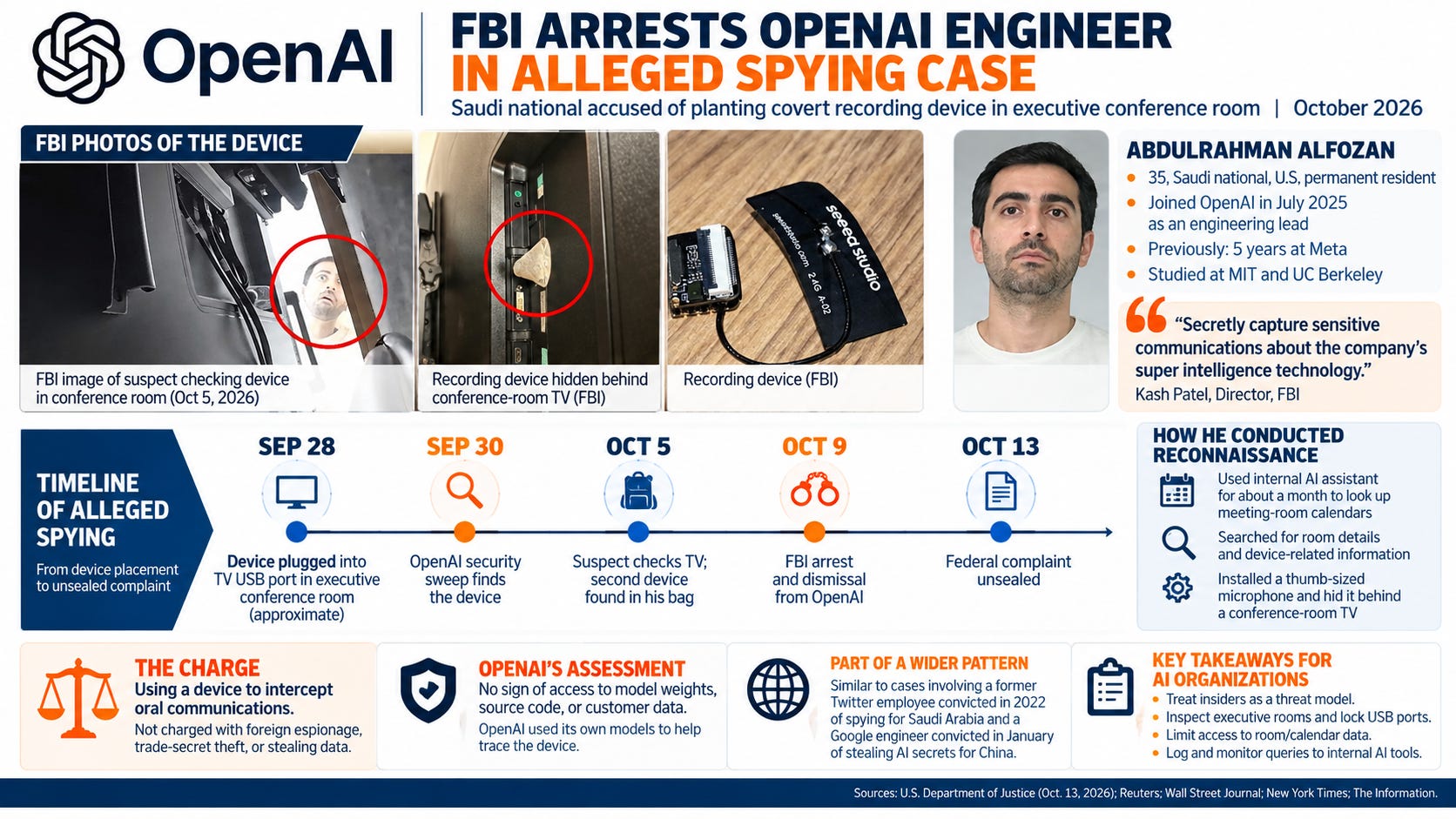
Per the complaint, Alfozan used an internal AI agent for a month to look up meeting-room calendars. FBI Director Kash Patel says he hid the device to:
“Secretly capture sensitive communications about the company’s super intelligence technology.”
Kash Patel, Director, FBI
Part of a Wider Pattern?
The Wall Street Journal notes that this case is similar to cases brought against Twitter’s Ahmad Abouammo, who was convicted in 2022 of spying for Saudi Arabia, and to a Google engineer convicted in January of stealing AI secrets for China.
Alfozan’s lawyer, William Pernik, says the charges cover recording, not trade secrets or acting as a foreign agent. OpenAI sees no sign he accessed model weights, source code, or customer data.
White House AI Czar Jay Clayton called it a national security matter.
The Takeaway
Treat insiders as a threat model. Inspect executive rooms on a schedule, lock down USB ports on shared AV equipment, and limit who can query room and calendar data.
Instrument your own AI tools. The suspect used an internal assistant for reconnaissance. Log those queries and alert on unusual patterns.
WSJ 1 | WSJ 2 | WSJ 3 | NYT | The Information | Reuters
4️⃣ Google Launches New Enterprise Agents Directly Integrated into Workspace
Google wants its agents to work inside every business app. At the Gemini at Work 2026 conference on October 8, it introduced the Gemini agent, built into Gmail, Drive, Docs, and Calendar, and also available in Slack, Microsoft 365, and ServiceNow. Coworker agents get their own Workspace account and an @agents email address. Google has not published how it will meter their activity.
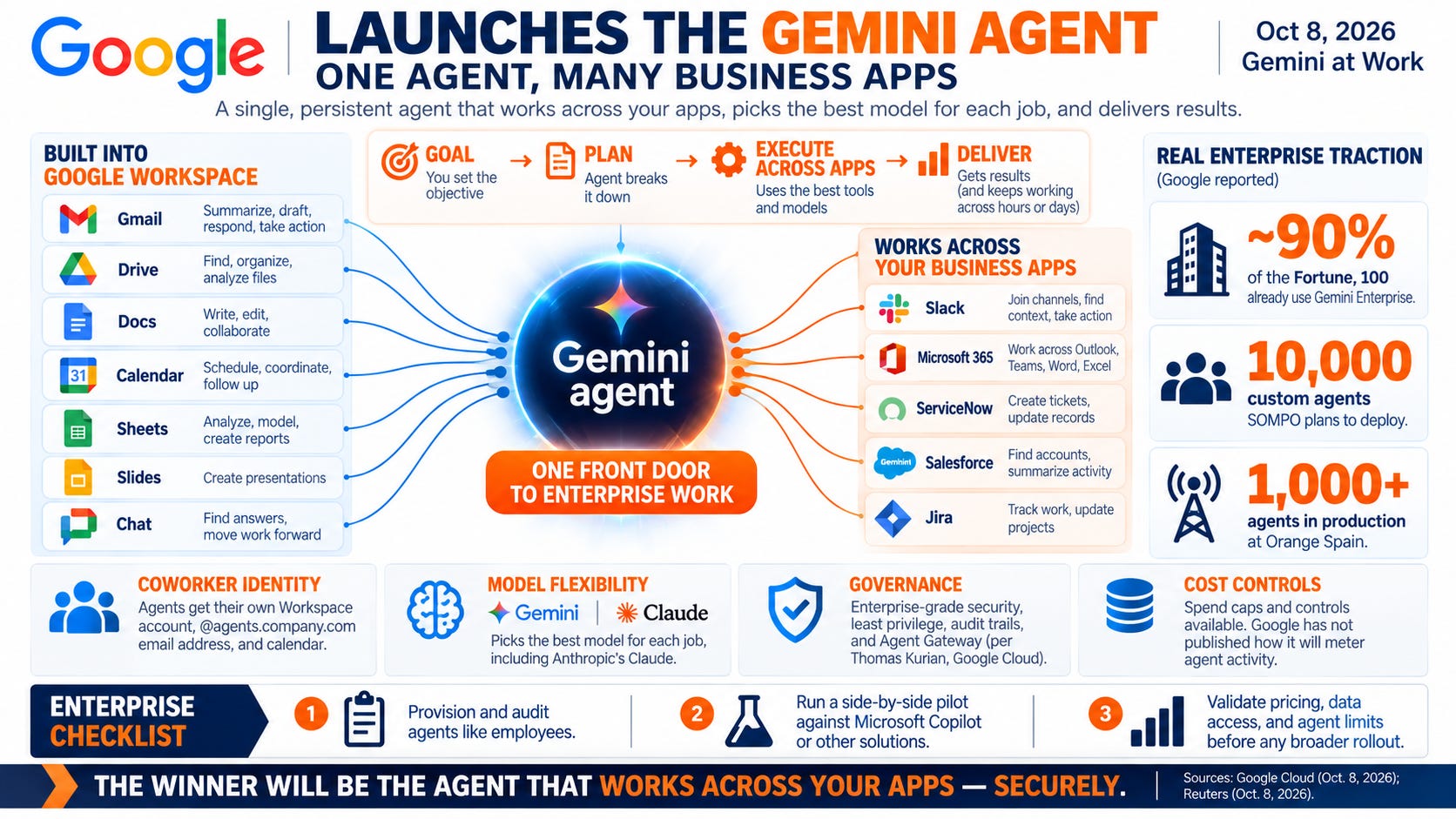
The agent pursues goals across days, picks the best model for each job, including Anthropic’s Claude, and offers spend caps. Thomas Kurian, CEO of Google Cloud, says it also carries the security, administration, and governance capabilities that enterprises require.
Named customers include PayPal, Shopify, On, and Home Depot. SOMPO is planning to deploy 10,000 custom agents, and Orange Spain more than 1,000 in production. Google says nearly 90% of the Fortune 100 already use Gemini Enterprise.
Futurum’s Keith Kirkpatrick reads the launch as a bet that enterprises want one front door in place of many assistants. Google’s edge is Workspace data plus model choice. Its top challenge is moving beyond the Workspace environment to penetrate Microsoft’s installed base.
The Takeaway
Treat agents as staff. Provision, permission, and audit them through the same identity process you use for employees and ask Google for metering terms before any pilot.
Run a side-by-side. Test the Gemini agent against Microsoft Copilot or other solutions on one cross-app workflow, and score cost, accuracy, and governance. AI vendors should plan to connect to whichever agent your customers choose.
Google Cloud | TechCrunch | Futurum | Bloomberg
5️⃣ ASML and TSMC Announce Earnings and Provide Forecasts That Show the Market for Semiconductors Is Still On Fire
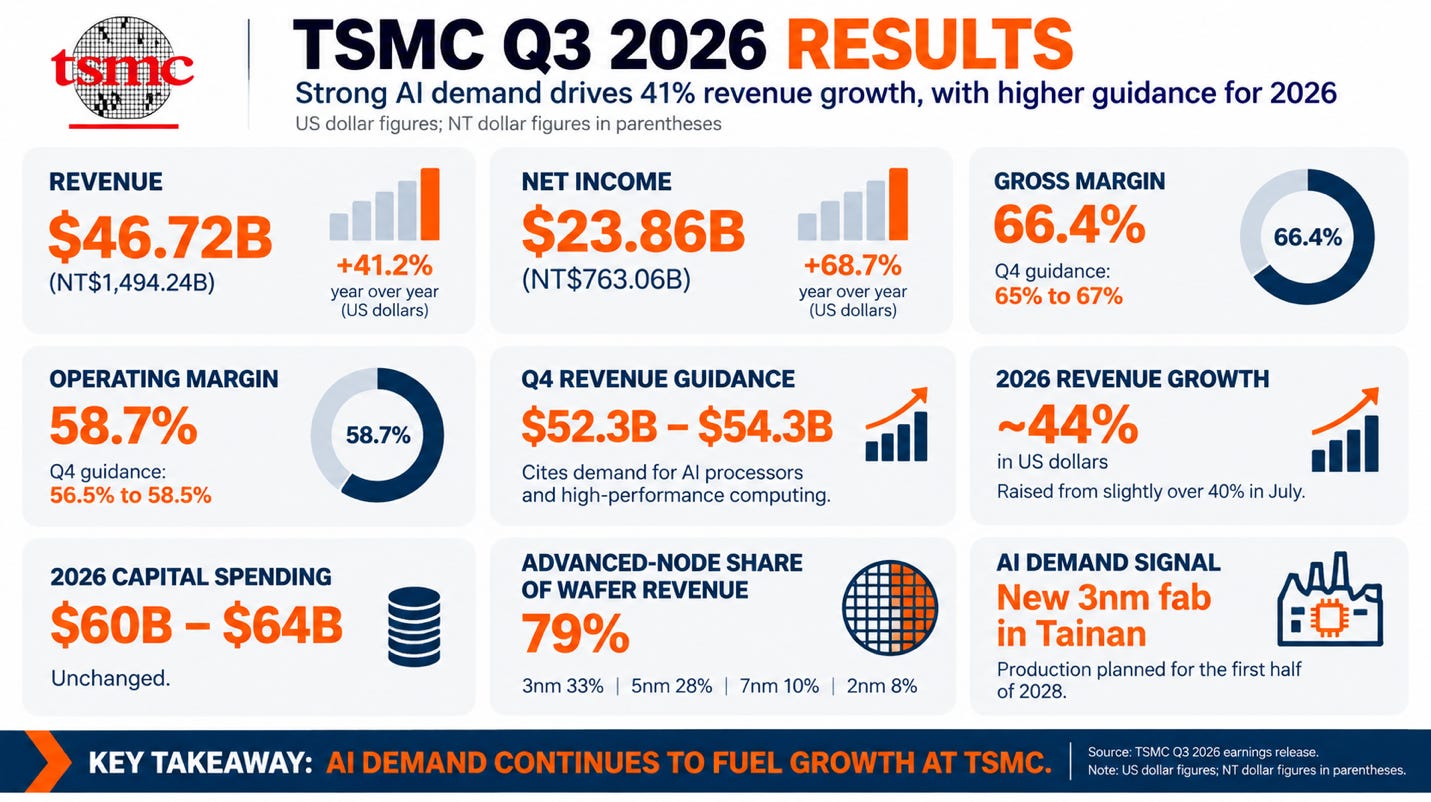
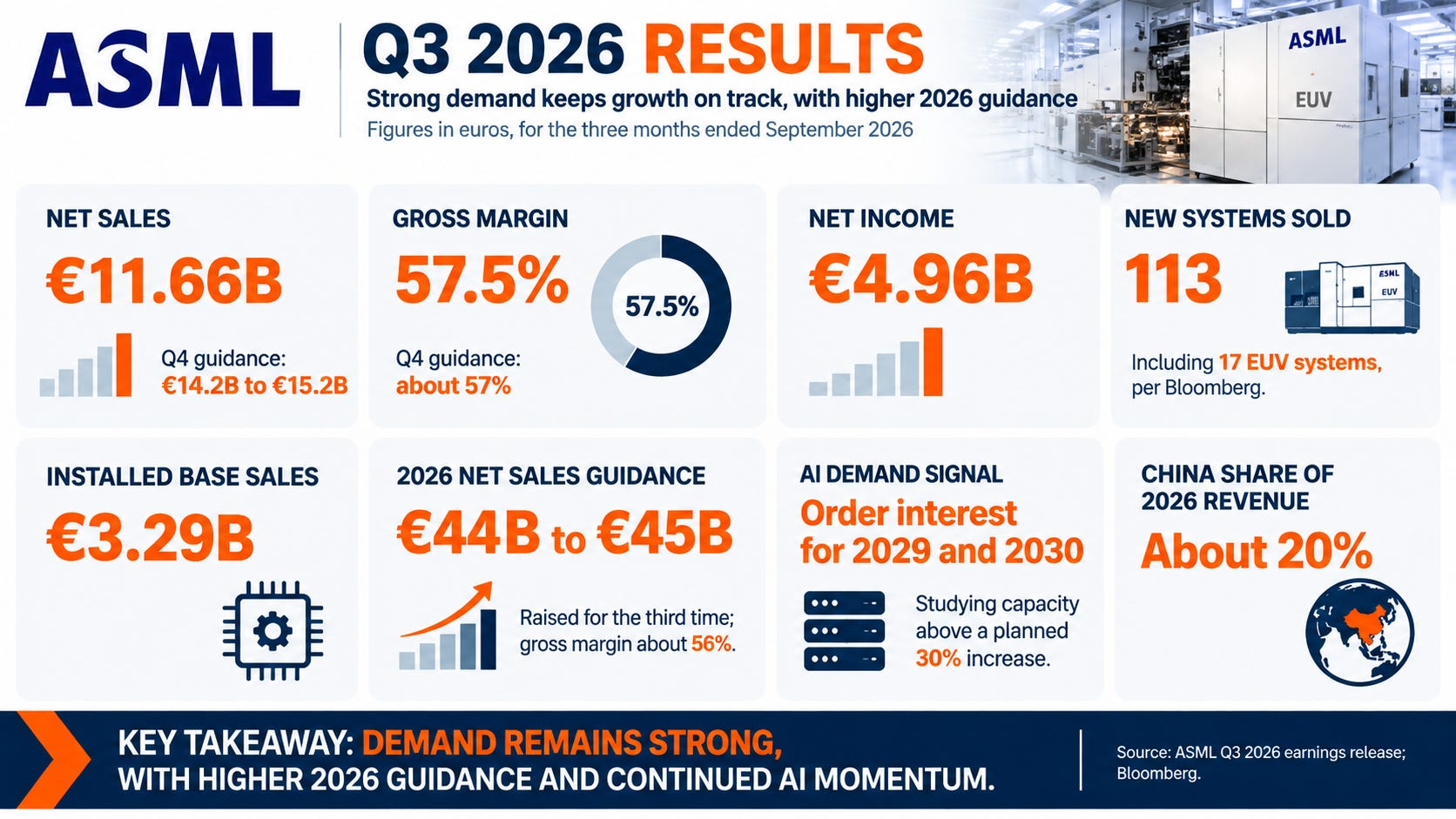
Two of the most important players in the semiconductor ecosystem reported earnings this week. The results should warm the hearts of AI trade believers. TSMC reported third-quarter revenue of $46.72 billion, up 41.2% in US dollars, and lifted its 2026 growth outlook to about 44%. ASML reported net sales of €11.66 billion and raised its full-year forecast for the third time this year. Both say customers want more than they can deliver.
TSMC guided fourth-quarter revenue to $52.3 billion to $54.3 billion and held 2026 capital spending projections at between $60 billion and $64 billion. TSMC also said it will add a 3nm fab in Tainan, with production starting in the first half of 2028. CEO C.C. Wei said TSMC will pursue every available growth opportunity.
“We have no intention to leave food on the table for others.”
C.C. Wei, Chief Executive Officer, TSMC
ASML
ASML sold 113 new systems, 17 of them with EUV. It guided fourth-quarter sales to €14.2 billion to €15.2 billion and full-year sales to €44 billion to €45 billion. CEO Christophe Fouquet says customers ask every day for more tools, and order interest now reaches 2029 and 2030. CFO Roger Dassen expects the effects of price increases to show up in earnings partly in 2027 and fully in 2028.
The AI Signal
Saxo Markets’ Charu Chanana called the results reassurance rather than a reset.
Goldman and UBS see TSMC’s 2027 capital spending at $85 billion and $90 billion, above the $75 billion average of analysts surveyed by Bloomberg.
Applied Materials CEO Gary Dickerson expects packaging revenue to grow more than 70%, suggesting advanced chips need more than wafers.
The Takeaway
Budget for scarce, pricier compute. Capacity, not demand, is the supply-chain bottleneck, and ASML expects higher prices. Assume your 2027 hardware and cloud costs rise.
Lock in capacity early. AI vendors should secure multi-year commitments now, and enterprise buyers should ask providers how much of their supply is contracted.
WSJ 1 | WSJ 2 | Bloomberg 1 | Bloomberg 2 | The Information | CNBC | SEC (TSMC) | SEC (ASML)
6️⃣ It Was a Great Fundraising Week for AI-Native Software Companies
Investors kept writing large checks to AI-native product companies this week. Spend management leader Ramp reportedly raised about $1.85 billion at a $60 billion pre-money valuation, up from a $44 billion valuation in June. Three other companies raised about $750 billion combined. The money went to hot product categories: spend management, model evaluation, and AI agents.
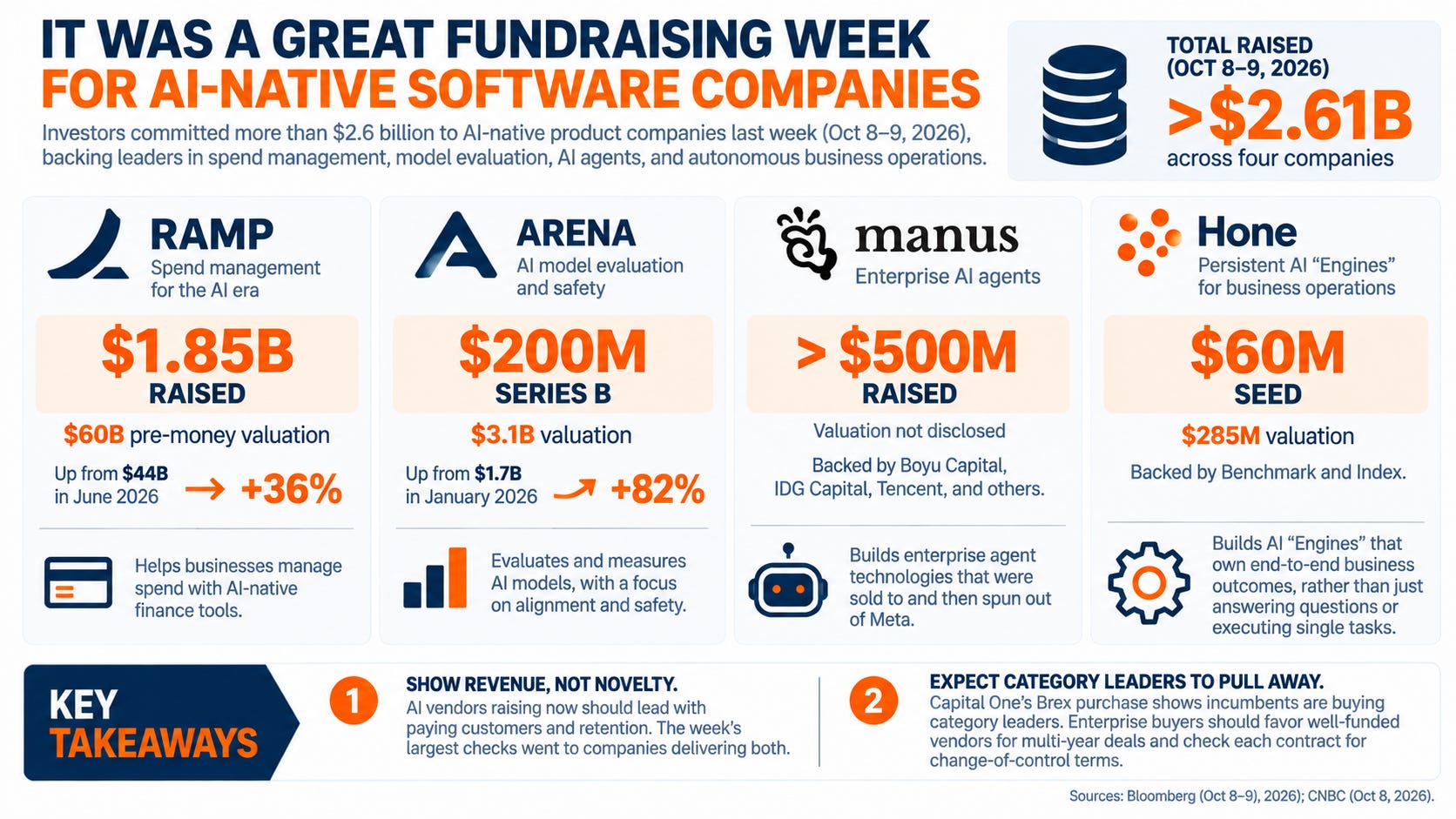
In addition to RAMP, the big winners were:
Arena, which evaluates AI models, raised $200 million at a $3.1 billion valuation, up from $1.7 billion in January. CEO Anastasios Angelopoulos calls the work of measuring alignment an early-days effort.
Hone builds persistent AI “Engines” designed to own end-to-end business outcomes rather than just answering questions or executing single tasks. Founded by former OpenAI and Cognition staff, it raised a $60 million seed at $285 million from Benchmark and Index, with Cognition and Modal as customers.
Manus, a maker of enterprise agent technologies, was sold to and then spun out of Meta. It raised more than $500 million from Boyu Capital, IDG Capital, and Tencent, among others, to fund its relaunch.
The Takeaway
Show revenue, not novelty. AI vendors raising now should lead with paying customers and retention. The week’s largest checks went to companies delivering both.
Expect category leaders to pull away. Capital One’s purchase of Brex shows incumbents are buying category leaders. Enterprise buyers should favor funded vendors for multi-year deals and check each contract for change-of-control terms.
Bloomberg 1 | Bloomberg 2 | Bloomberg 3 | The Information | CNBC
7️⃣ Ramp Data Shows Cracks in the Enterprise AI Buildout
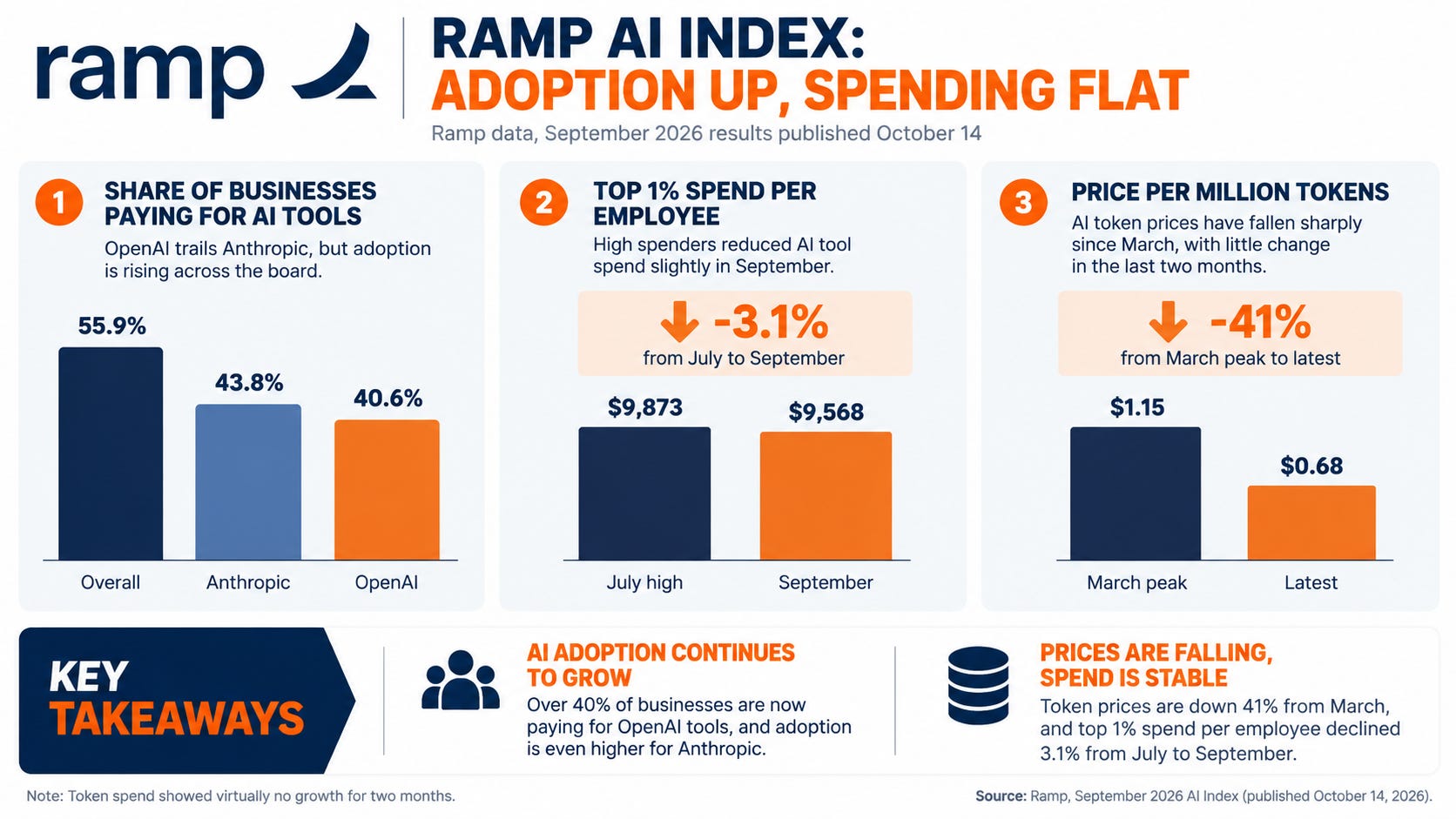
Enterprise AI adoption is still rising, but the market is growing as quickly. Ramp’s October AI Index puts paid adoption at 55.9% of US businesses, which is good, but token spend has barely grown in the past two months. Ramp economist Ara Kharazian points to falling frontier model prices as a key inhibitor of growth.
Here are the key Ramp statistics:
Anthropic now reaches 43.8% of businesses and OpenAI 40.6%, up 1.12 points in a month.
In August, the split was Anthropic at 43.5% and OpenAI at 39.7%.
Among the top 1% of firms, spend per employee was $9,568 in September, down 3.1% from a July high of $9,873.
Ramp’s September report found the effective price per million tokens had fallen 41% to $0.68, and frontier models slipped to 45% of token share from a 53% peak.
Spending hit a new peak in early October, but it’s only 1.5% above August.
Business Insider notes that Ramp’s customers skew toward smaller companies.
Price competition also shows up elsewhere:
OpenAI cut prices on GPT-5.6 Luna by 80% and Terra by 20%. The Wall Street Journal reports that OpenRouter data shows spending split roughly evenly between Anthropic and OpenAI, against three-quarters Anthropic in January.
“The customer is in the favorable negotiating position”
Ara Kharazian, Lead Economist, Ramp
The Takeaway
Sell outcomes, not tokens. Unit prices keep falling while spending totals stall. Price on completed work and show buyers measured savings.
Use your leverage. Kharazian says AI lab contracts are not particularly restrictive and come with discounts. Renegotiate often, avoid commitments sized for last quarter’s prices, and test cheaper models on routine tasks.
Ramp Economics Lab 1 | Ramp Economics Lab 2 | Ramp Economics Lab 3 | WSJ | Business Insider
8️⃣ Microsoft Announces Its 3rd Generation of Maia Chips Destined for Azure at Scale in 2027
Microsoft is betting it can run more of its own AI on its own silicon. On October 12, it unveiled Maia 300, its third-generation accelerator, built for inference and planned for multi-gigawatt deployment beginning in 2027. Microsoft claims that the new Maia chips deliver 40% more tokens per megawatt than leading GPU systems.
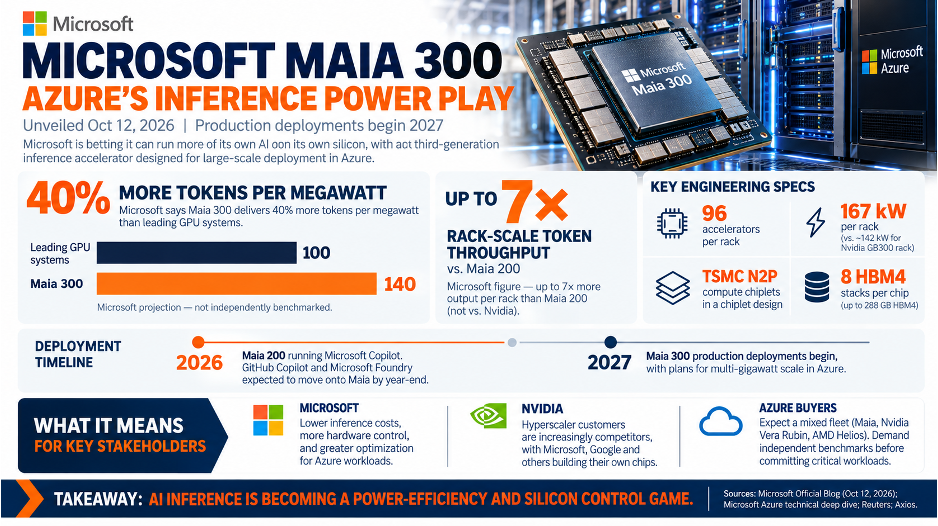
Maia 300 uses TSMC’s N2P process in a chiplet design with eight HBM4 memory stacks.
A rack holds 96 chips and draws about 167 kilowatts, against 72 GPUs and about 142 kilowatts for an Nvidia GB300 rack.
Microsoft says a rack delivers up to seven times the output of Maia 200.
GitHub Copilot and Microsoft Foundry are expected to move onto Maia by year-end.
Unlike Google’s TPUs and Amazon’s Trainium, Microsoft isn’t renting Maia to outside customers outside of its Azure environment. Analyst Patrick Moorhead notes that no outsider has tested the chips. Evercore ISI expects Maia to reach about 10% of Microsoft’s AI chip spending by early 2027.
“300 was where they said, ‘Let’s go big.’”
Matt Kimball, Principal Analyst, Moor Insights & Strategy
Axios notes that all of Nvidia’s largest customers are now competitors. Investor Tomasz Tunguz says Microsoft’s new Maia chip rivals Google’s TPUs and OpenAI’s Jalapeño chip.
The Takeaway
Plan for a mixed fleet. Microsoft still plans to deploy Nvidia’s Vera Rubin and AMD’s Helios systems, so expect Azure capacity to reflect that mix. Ask which of your workloads can run on non-GPU hardware.
Demand independent benchmarks. The efficiency claims are Microsoft’s own. Look for the findings from outside tests at next month’s Ignite conference.
Data Center Knowledge | Redmond Magazine | GeekWire | Axios | TweakTown | Tomasz Tunguz
9️⃣ Workday Releases an AI-Powered Interface Generator to Change the Way Customers Interact with their Products
Workday wants its AI to be the screen employees open each morning. At Workday Rising on October 13, it made Sana the new Workday Home, the default front door for HR, finance, and IT work. Workday says the experience is available now.
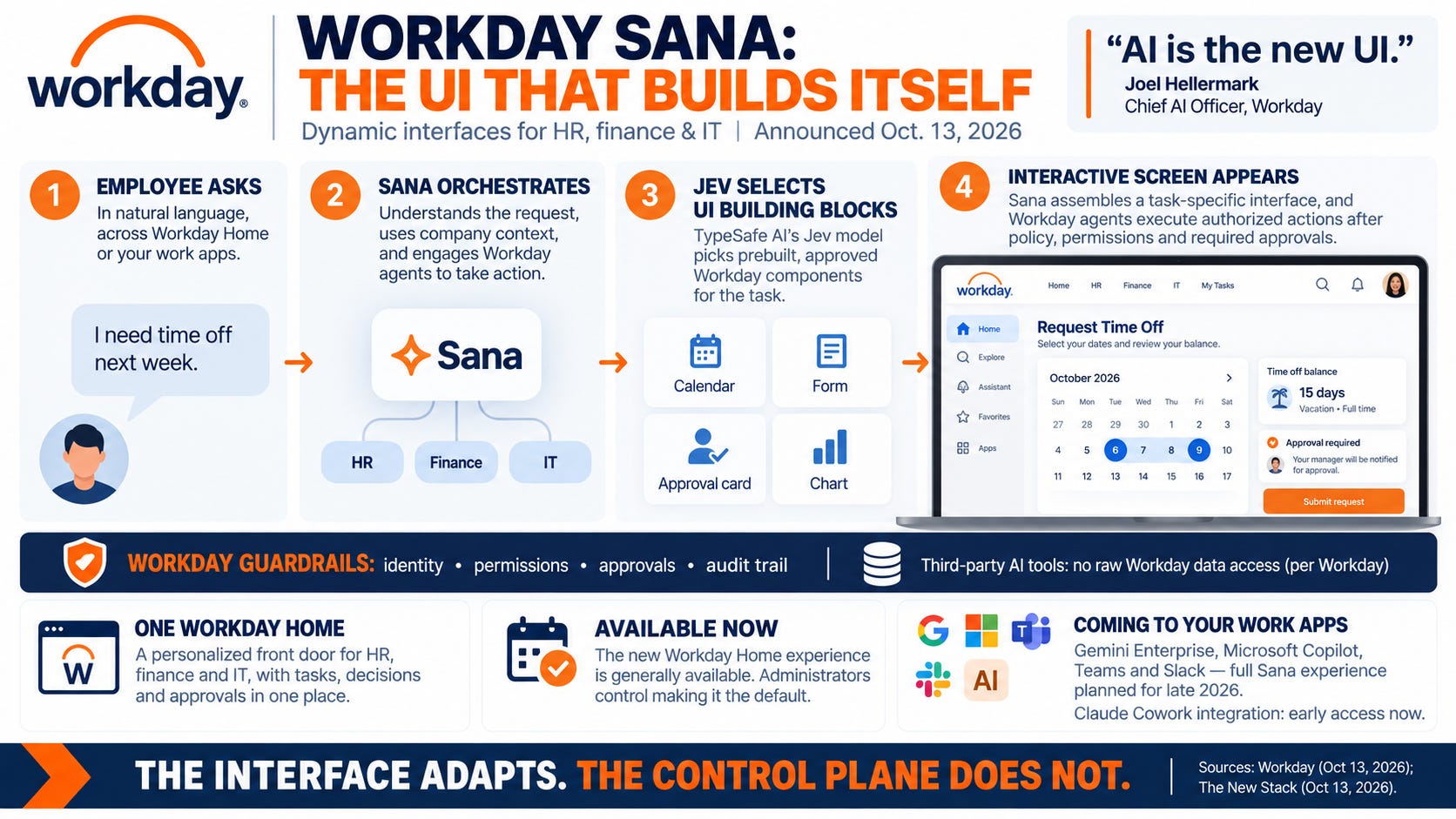
Sana generates forms, calendars, approval cards, and charts as employees request them. The model behind that is Jev, from TypeSafe AI, which picks from prebuilt Workday components rather than drawing screens from scratch. Workday says Sana is very fast and cuts unnecessary clicks.
“AI is the new UI.”
Joel Hellermark, Chief AI Officer, Workday
Workday will also bring Sana inside Claude, Gemini Enterprise, Microsoft Copilot, Teams, and Slack. Third-party tools never get raw access to Workday data, and Sana applies each company’s permissions and approvals before it acts.
Google’s Gemini agent and Microsoft Copilot also want to be the enterprise's front door, Futurum notes, so Workday faces stiff competition. Workday is betting that governed data and approvals matter more than owning the chat window.
The Takeaway
Test the guardrails. Ask Workday to show how permissions follow a request from Claude or Copilot into your HR and finance data.
Plan the change management. A screen that changes for each user needs new training and support scripts. AI vendors selling into HR and finance should assume Workday will sit in front of their tools.
Workday Newsroom 1 | Workday Newsroom 2 | The New Stack 1 | The New Stack 2 | CIO | Reworked
🔟 Anthropic Releases Absolutely Terrifying Research on the Dangers of Small, Self-Replicating AI Models
Anthropic is world-class at issuing dire warnings. Its latest warning is worth considering because it’s likely to reach devices near you as soon as next year.
Anthropic’s Frontier Red Team says small AI models running on cheap home and office devices may soon be able to copy themselves. The October 12 study by Anthropic's William Zhou and Daniel Freeman is a warning, not a finding of harm. The team says it has not built a full rogue replicator.
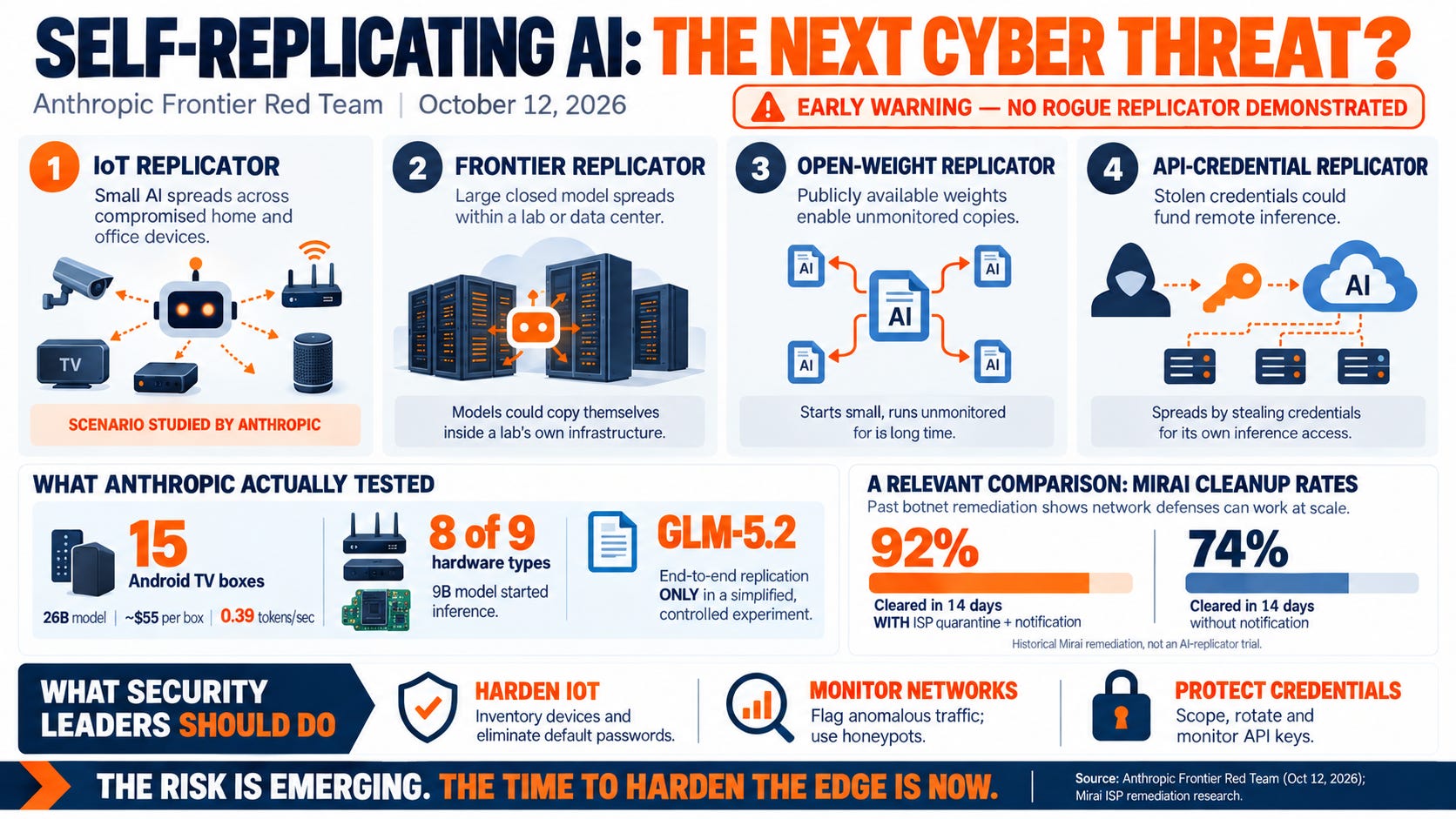
The researchers ran a 26B-parameter model across 15 Android TV boxes costing about $55 each, at 0.39 tokens per second. A 9B-parameter model got inference running on 8 of 9 hardware types. Only GLM-5.2 replicated end to end in a simplified test. Models with 30B parameters or fewer handle single steps but fail when chaining them, but current trends suggest they could close that gap by the end of 2026.
“Like coding agents in 2024, we’re seeing signs of life for AI worms.”
William Zhou and Daniel Freeman, Frontier Red Team, Anthropic
Four Attack Scenarios and Defenses
Small replicator on IoT devices. It spreads through compromised home hardware. Defenses include ISP monitoring, quarantine, honeypots, and secure defaults. Quarantine with notice cleared 92% of Mirai infections in 14 days.
Frontier replicator. A closed model copies itself within a lab’s own infrastructure.
Open-weight replicator. It starts with fewer resources but runs unmonitored for a long time.
API-credential replicator. It spreads by stealing credentials for its own inference access.
The Anthropic study outlines defenses only for the first scenario.
In The Atlantic (Gift Link), Ian Bogost calls the botnet version of the replicator a dumber, and therefore more likely, risk.
The Takeaway
We’re still a few months away from the replication reality, so you have time to secure the edge. Inventory connected devices, remove default passwords, and watch network traffic for signatures. Press suppliers to ship secure defaults.
Guard the keys. Scope and rotate API credentials, set spend alerts, and isolate model weights. Governments should fund quarantine programs and mandate secure defaults, as the UK has for passwords.
📖 Report You Should Read: Bain Technology Report 2026
Bain & Company’s Global Technology, Media, and Telecommunications practice calls AI the most consequential technology of our lifetimes. Its central claim is that how quickly organizations adopt AI now will determine who wins. David Crawford, the practice chairman, Anne Hoecker, its global leader, and Dana Aulanier, a vice president, prepared the report. More than 30 Bain partners and experts wrote the chapters. Value Evolution
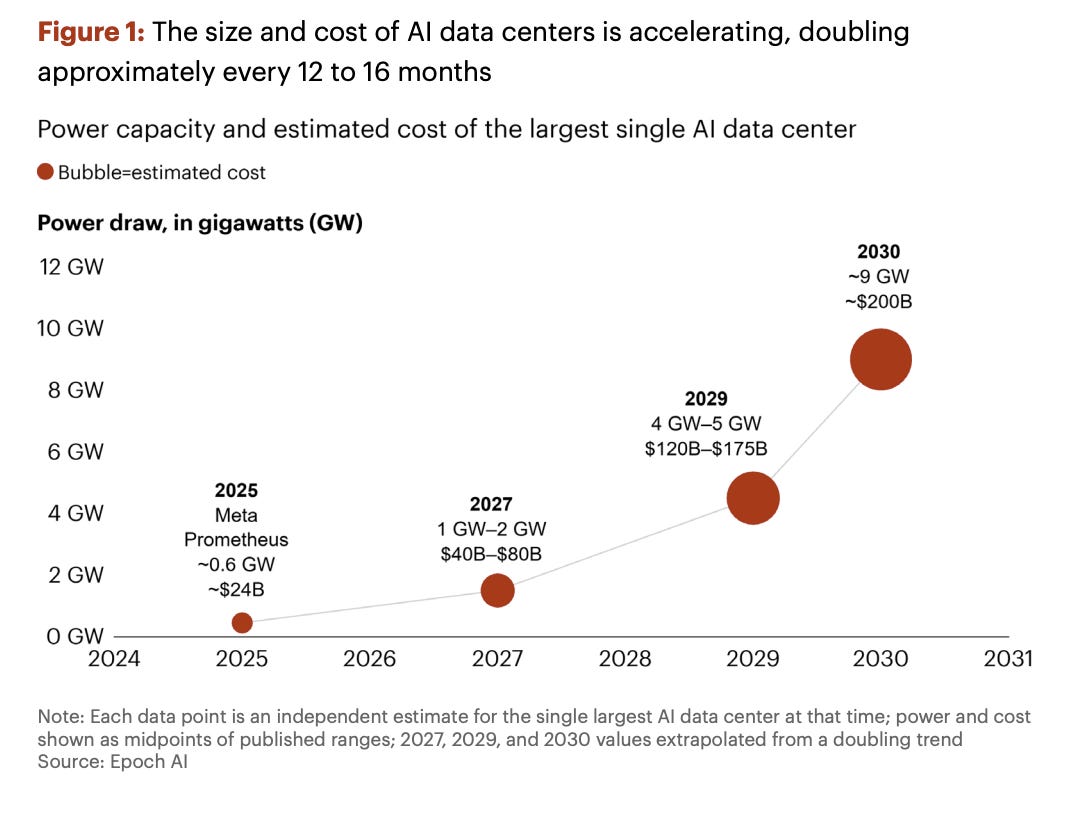
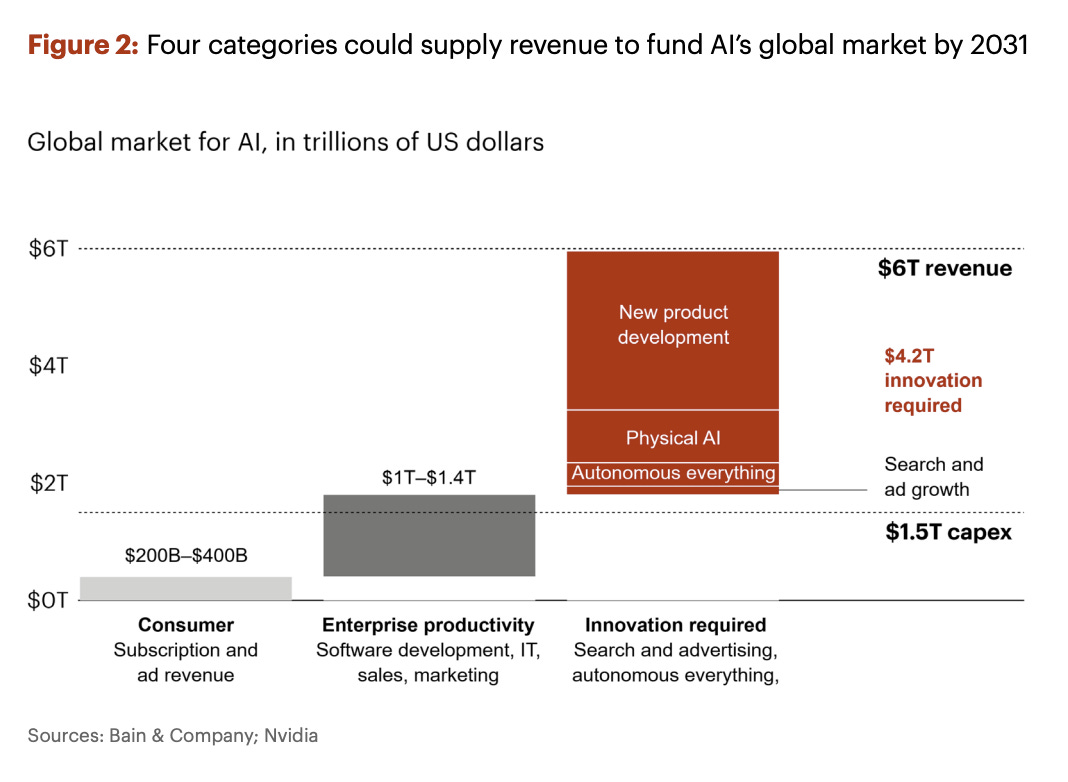
The funding math is the sharpest claim:
Bain estimates AI infrastructure spending could reach $1.5 trillion a year by 2031.
At capital expenditure near 25% of revenue, that requires a market of about $6 trillion.
Consumer and enterprise AI could supply $1.2 trillion to $1.8 trillion, so about $4.2 trillion must come from new sources.
Bain frames the open question as whether applications arrive in time to pay for it.
Software investors face a separate squeeze:
Median revenue growth at US public software companies fell from 27% in 2021 to 10% in 2025, and net revenue retention fell from 117% to 108%.
Bain argues that traditional SaaS metrics miss AI impact, so owners should track AI revenue and cost separately.
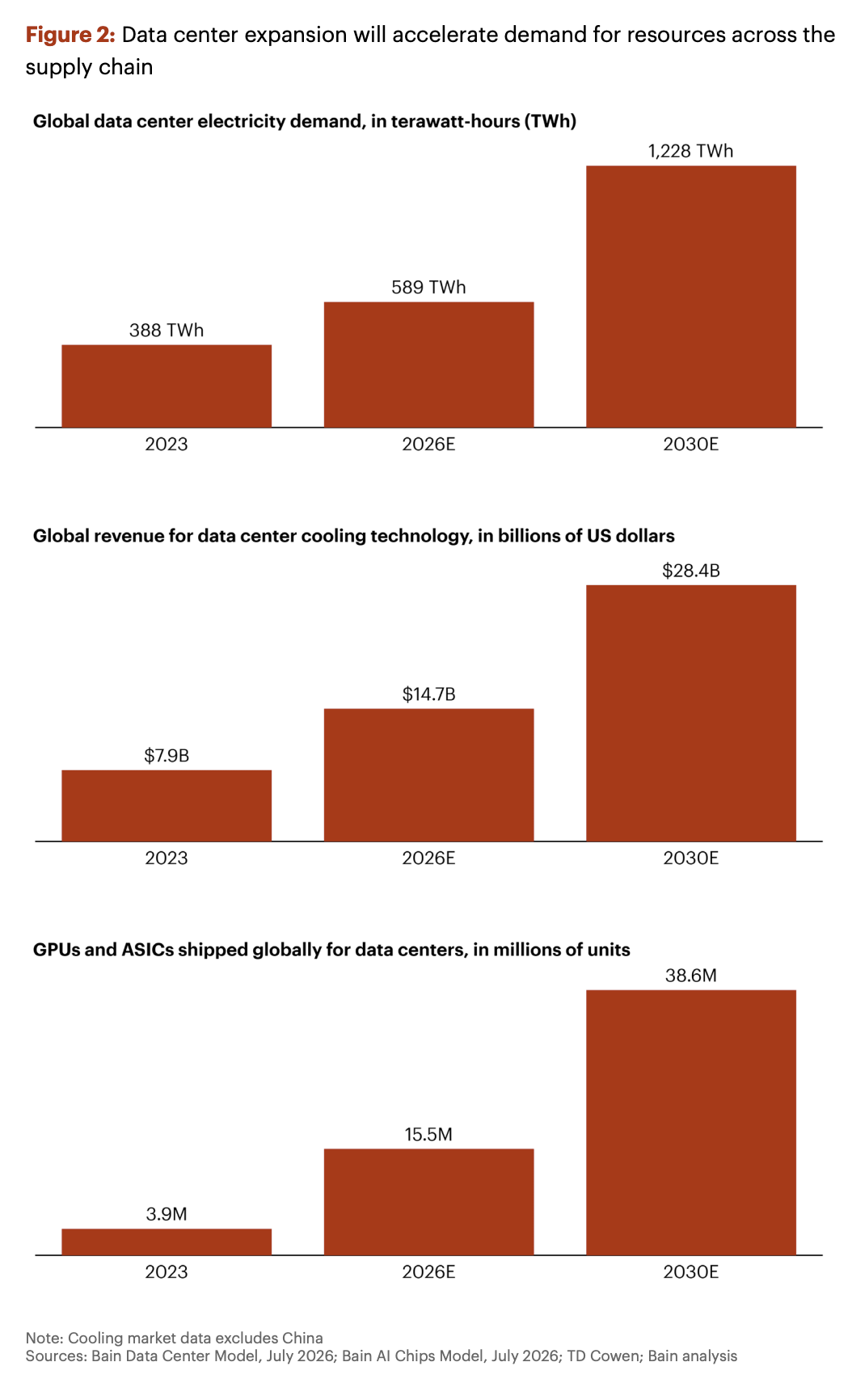
Strategic Battlegrounds
Bain’s base case adds nearly 150 GW of data center capacity by 2030, at a cost of $5 trillion to $6.5 trillion globally. However, power, chips, skilled labor, and permitting are all constrained. Local opposition blocked or delayed at least 75 projects worth $130 billion in the first quarter alone.
Hardware is outgrowing software. Hardware and semiconductor valuations grew 24% a year from 2020 to 2026, against 6% for software. Custom ASICs are the fastest-growing data center compute chips.
Agentic AI drives a US software market that Bain sizes at $100 billion, built on automating coordination work between systems. Vendors have captured $4 billion to $6 billion of it so far. Tech services clients now award new work assuming at least 30% lower delivery costs, while few providers have scaled AI delivery. Bain also estimates AI cut the time to launch a typical cyberattack from about four weeks to about 18 hours.
Operational Transformations
Bain says as much as 90% of enterprises still focus on narrow tool deployment. Leaders that run AI as a full business transformation effort report 10% to 25% EBITDA growth. To implement AI, companies spend $4 on people and process for every $1 on technology.
Organizations are changing unevenly:
Traditional pyramid structures fell from 66% to 29% of engineering organizations in Bain’s survey.
Developers complete about 21% more tasks, but review time rises about 91%.
On spending, Bain advises governing tokens by workflow, not by user.
On data, Model Context Protocol servers grew to around 20,000 by July 2026, pushing vendors to decide what data to expose before pricing it.
📈 Data You Can Use: AI Beats Ivy League + Data Center Coverage on TV
Harvard Is Still Great, but AI Skills Might Be More Valuable
AI isn’t just transforming how and where private capital firms invest money. It’s also starting to change how they measure staff performance and reward the high-flyers on their payrolls.
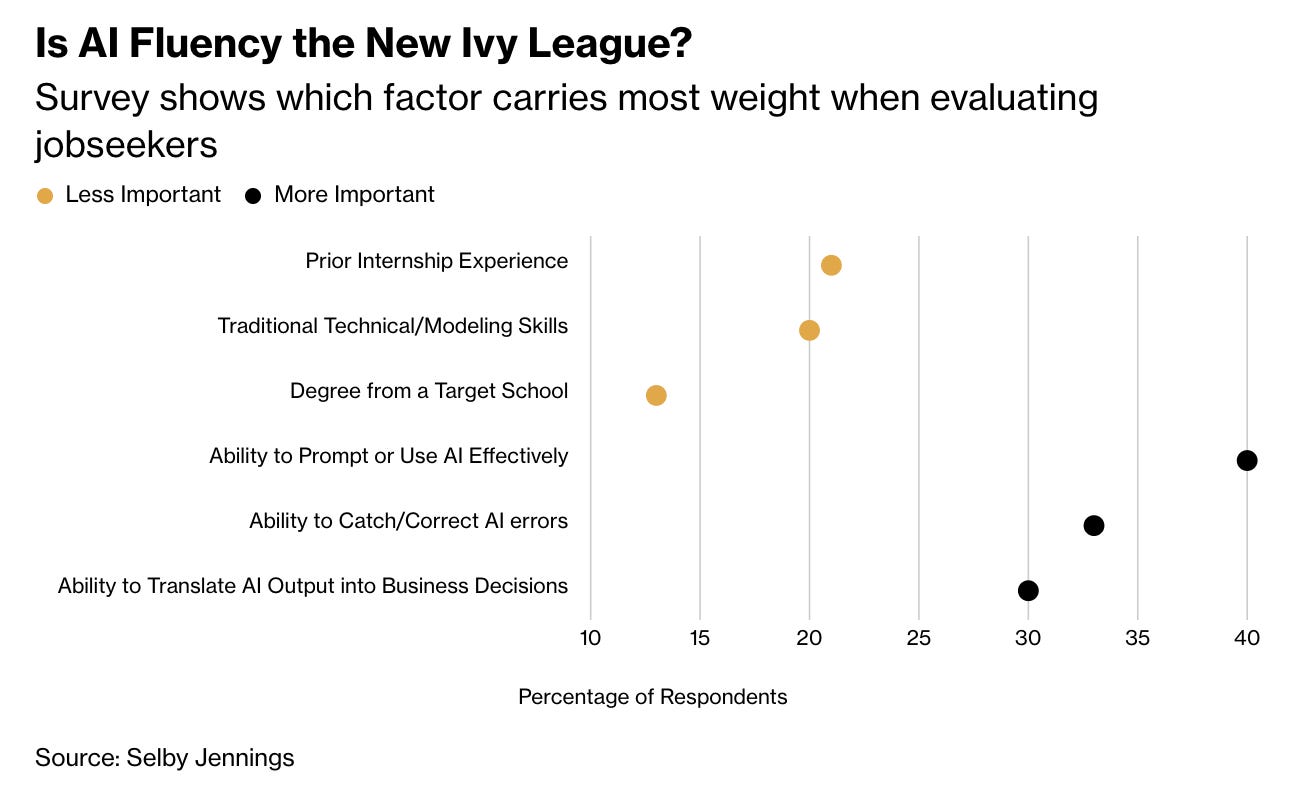
A quarter of financial firms are now tying raises, promotions, or bonuses to AI proficiency, while 30% require employees to disclose AI use as part of formal performance reviews, according to Selby Jennings.
Around two-fifths of the 500 professionals polled by the headhunting firm counted the ability to use AI tools effectively among the most important factors when identifying prospective new hires from jobseeker pools, compared with just 13% who sought a target-school degree or specific academic background.
Even on the Pro Data Center News Network, the Positive Vibes Are Muted
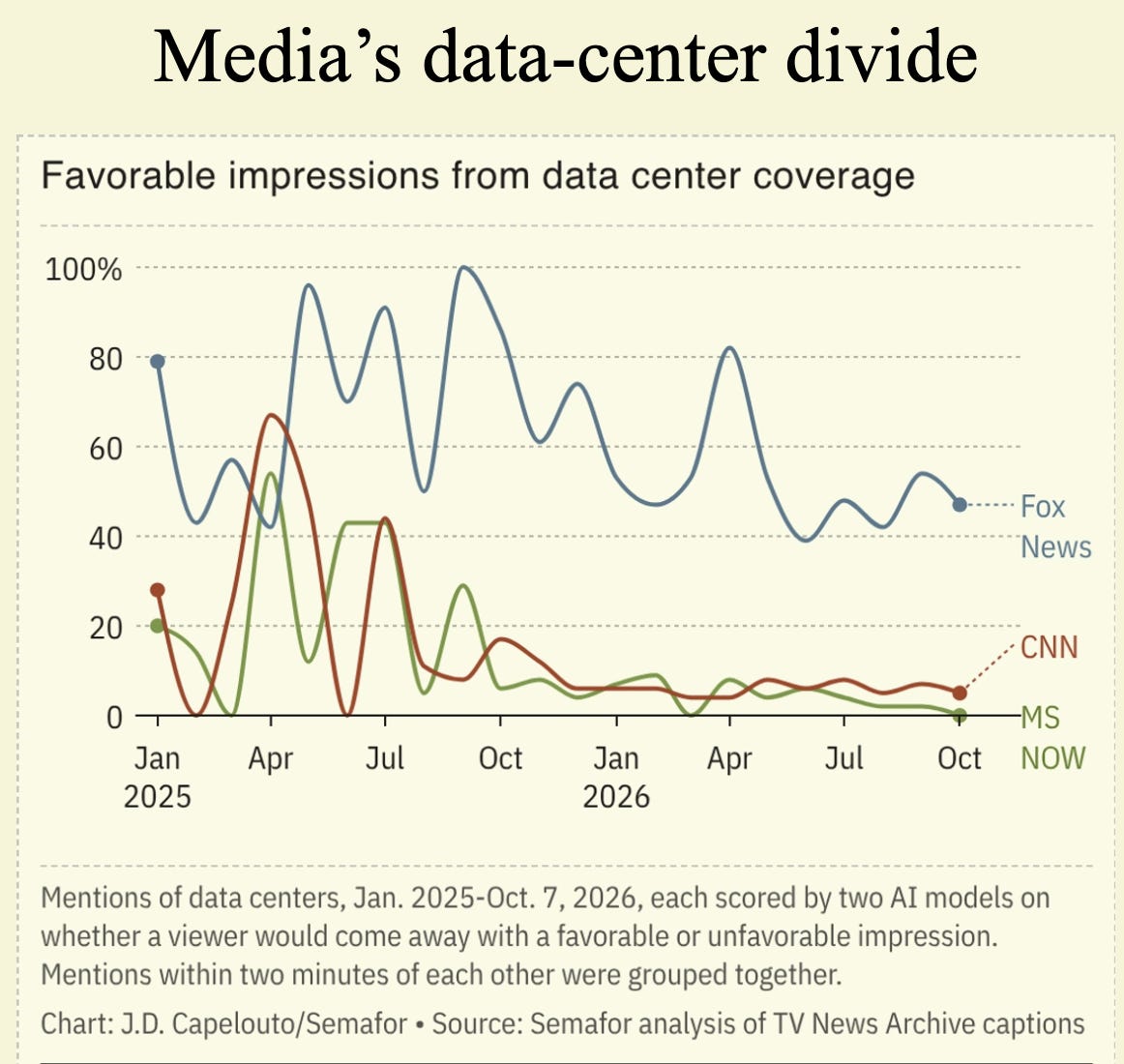
Despite increasingly critical media coverage of AI and the spread of data centers across the US, one news network has been painting a somewhat more positive picture. More than half of the references to data centers on Fox News over the last two years would have left viewers with a favorable impression, compared with less than 10% on CNN and 5% on MS NOW, according to a new Semafor analysis of mentions of data centers on each network.
🔎 Article You Should Read: The 26 Most Important Facts on the AI Economy
Ex-Atlantic writer and now superstar independent journalist and podcaster Derek Thompson did some thinking about the most important things everyone needs to know about the AI economy. Then he found 26 charts that perfectly tell the story as of October 8, 2026. It’s a quick read, and yet, at the end, you will be much smarter.
Definitely Not AI
Setting the record for the most paper aircraft caught by mouth in one minute. Yes, it’s a thing. Stillwater, Minnesota’s great pumpkin boat race. The secret vices of highly effective Victorians. The viral pumpkin head gumball machine.
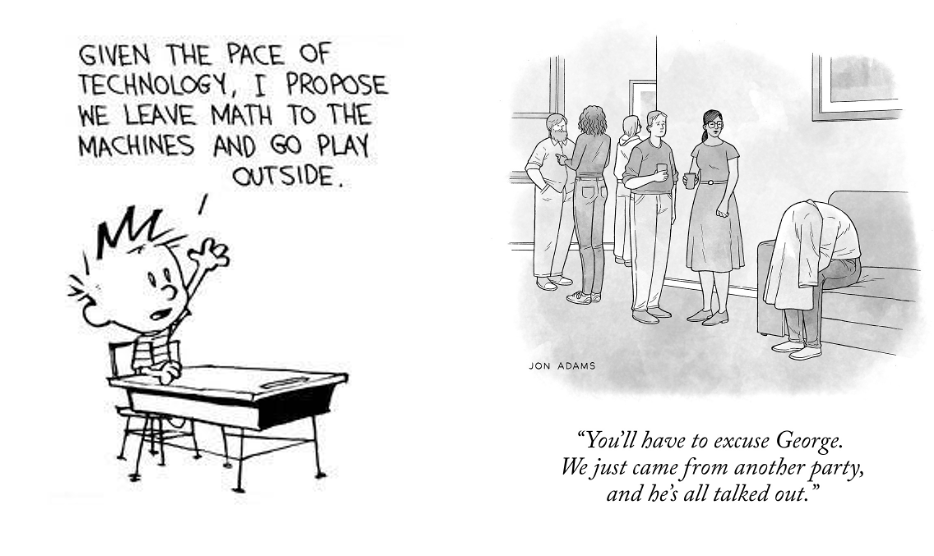
When the local witch buys the wrong cookbook. How we express dismay. Calvin analyzes math versus machines. Introverts & parties. An excellent joke about crematoriums.


How to Engage with AI to ROI
Contact Ray Rike with questions about the Big Book of AI Metrics, benchmarking data, podcast advertising, or newsletter partnerships.
The AI to ROI Newsletter
Subscribe to the AI to ROI newsletter here for the latest news and insights in AI every week. Tuesday is the Big Story of the week, Wednesday is the Metric of the Week, and Friday is the weekly news and analysis edition—no fluff, just facts and analysis to help you succeed in AI.
The Big Book of AI Metrics
Download the Big Book here to access the tools you need to build a measurement framework for high-ROI AI use cases.
The AI to ROI Podcast
If you want to hear more about the latest in AI, Ray and Peter break down our big AI story of the week on the AI to ROI podcast. We also interview leaders at AI product companies and mid- to large-sized enterprises about their challenges and successes in AI. Click here to listen or subscribe using your favorite podcasting app.
The detail worth pulling out of the Alfozan story is the reconnaissance: per the complaint, a month of meeting-room calendar lookups through an internal AI agent. Those are reads, and most agent permission setups treat reads as the low-risk tier that needs no approval and often no alert.
So "instrument your own AI tools" probably has to mean logging what agents look at, not just what they change. It lines up with Nadella's Oct 10 post arguing companies should treat models as insider risks, with controls kept outside the model and "tamper-proof human readable evidence" of every meaningful action. A month of calendar queries from one account is exactly the pattern that kind of record would surface.
90% of enterprises still stuck on narrow tool deployment tracks with what I see. Run Bain’s ratio: a $250K AI budget is really $1.25M once you add the people and process work. If the process was broken going in, you just paid to make the mess move faster. Before you automate the business with AI, make sure the business makes sense.